
The Short Answer
Attic insulation cost comes down to how much insulation your attic is missing, how big the attic is, which material goes in, whether old insulation has to come out first, how much air sealing comes before it and how easy the attic is to work in. Because those change from one house to the next, Complete Insulation does not publish flat prices. You get a quote after a free energy audit measures your attic, with the work laid out as options in priority order.
Want a number for your own attic? Our attic insulation page explains how we do the work, and the free energy audit is where every quote starts.
1. How Much Insulation Is Already There
The starting point matters most. The 2012 edition of the energy code set an R-38 attic target for this climate zone, and the average attic we find in the homes we audit holds about R-19. An attic at R-19 needs a lot less added than one with a thin, settled layer from decades ago. The audit measures what your attic has today, so the quote starts from your real number.
2. The Size of the Attic
Insulation is priced by the area it covers and the depth it goes on. A small ranch attic and a large two-story home with a sprawling attic are very different jobs, even when both need the same R-value.
3. Blown-In, Batts or Spray Foam
The material changes the price more than anything except the size:
- Blown-in fiberglass. The usual choice for existing attics, retrofits and topping up insulation that has settled. Adding it over a dry, clean existing layer is the lower-cost way to reach current levels. See our fiberglass insulation page.
- Fiberglass batts. Best where framing is open, such as new construction, and cut to fit around wiring and pipes.
- Spray foam. A premium product. Open cell costs roughly half as much as closed cell per board foot, and foam on the underside of the roof deck for attic encapsulation is a bigger project than a floor top-up. Our spray foam insulation cost guide covers what drives foam pricing.
4. Removing Old Insulation
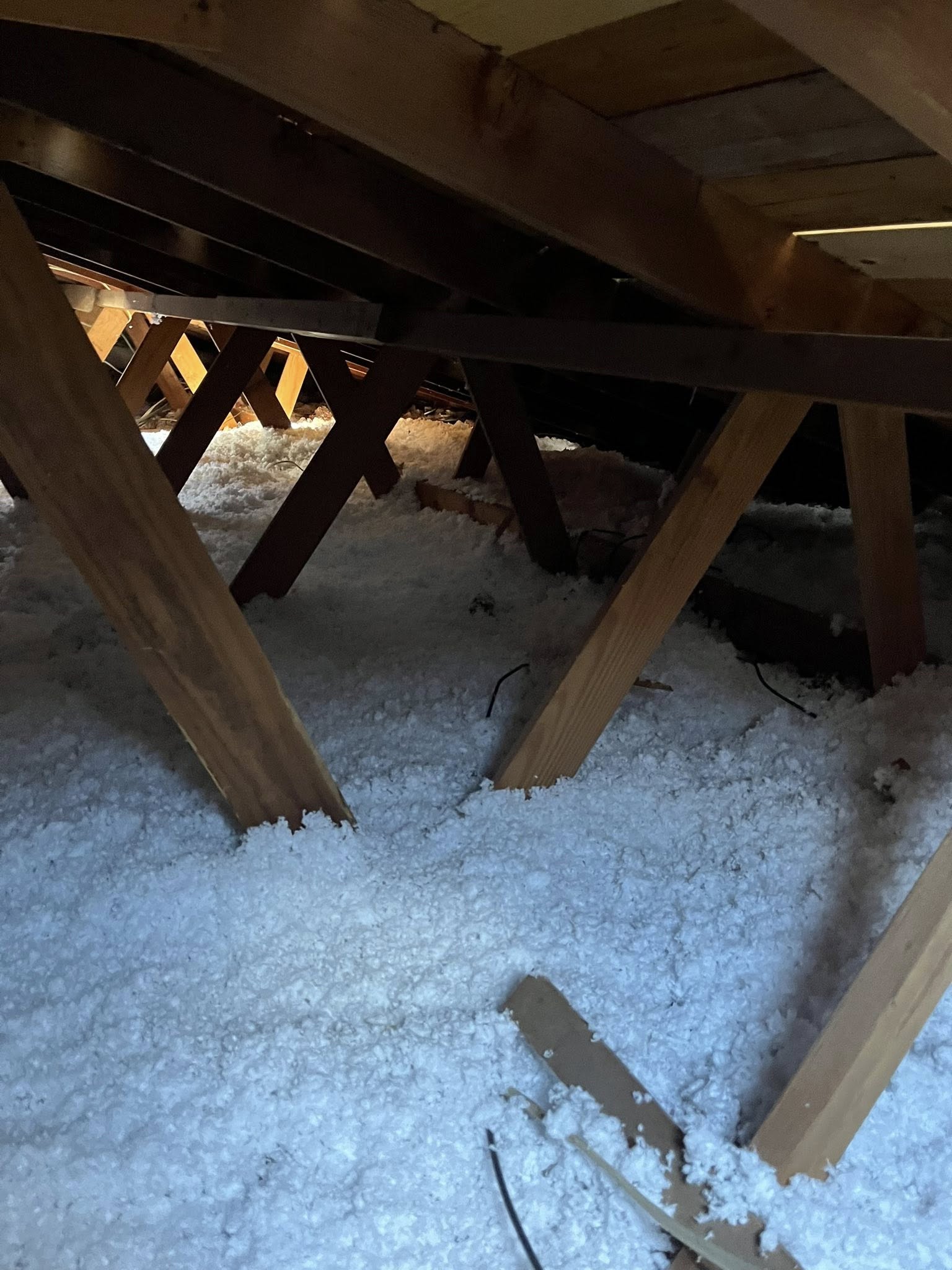
New insulation can usually go over the old if the existing material is dry, clean and intact. If it is not, or if you choose closed-cell spray foam, the old insulation generally has to come out first so the new material can do its job. Removal adds labor to the quote, and we tell you during the walk-through whether it is needed.
5. Air Sealing Before Insulating
We seal before we insulate. Top plates, can lights, plumbing stacks and electrical penetrations are caulked and foam sealed before any insulation goes in, because insulation on top of open leaks does not perform. The more bypasses an attic has, the more sealing comes first. Our air sealing page explains the work.
6. Access and Prep
How easy the attic is to reach and move around in affects the labor. Baffles go in at the eaves to keep ventilation open, and depth markers go in throughout so you can see what was installed.
7. What Else Gets Done at the Same Time
Many attic projects pair insulation with duct sealing. Most homes leak 15 to 25% of their conditioned air at duct joints, and in North Texas those joints are usually in the attic. Doing both while the attic is open usually means fewer trips into it.
How to Get an Accurate Price
Every quote starts with a walk-through: a blower door test, thermal imaging and a duct inspection, so the recommendation matches what the attic actually needs. You get a prioritized list of fixes with honest estimates, presented as options. For larger projects, we can recommend financing partners who specialize in energy efficiency improvements. Complete Insulation is a family-owned insulation contractor based in Azle, serving Azle, Fort Worth, Weatherford and the rest of North Texas.
Attic Insulation Cost FAQs
Why Don't You List Attic Insulation Prices Online?
Because the price depends on the insulation you already have, the size of the attic, the material, removal, air sealing and access, and those change with every house. A number without measuring would only be a guess. The free energy audit gives you a real quote for your attic.
Is Blown-In Insulation Cheaper Than Spray Foam?
Yes. Adding blown-in fiberglass over the existing layer is the lower-cost way to reach current levels in a vented attic. Spray foam is a premium product that makes the most sense when you plan to stay in the home for five years or more or are chasing comfort problems like a hot upstairs.
Can New Insulation Go Over the Old?
Usually yes, if the existing material is dry, clean and intact. We inspect first and document what is underneath. Closed-cell spray foam is the exception: in most cases the old fiberglass comes out first so the foam can bond.